
Korea export zero-rate VAT: what documents do you need?
Korea zero-rate VAT on exports: documents for direct exports vs local L/C or purchase confirmation deals, plus filing tips for input VAT refunds.
Contents
- Key takeaways
- What exports qualify for the zero rate?
- Which documents do you attach by deal type?
- How does input VAT work on a zero-rate export? (example)
- What mistakes are common when filing zero-rate VAT?
- FAQ
- How does a direct export differ from a local L/C deal?
- What if you do not attach the supporting documents?
- Does every export get the zero rate automatically?
- When is the input VAT refund paid?
- Sources
Key takeaways
- Under Article 21 of the Value-Added Tax Act, exports of goods are subject to a zero (0) percent rate.
- Direct exports require an export performance statement; local L/C or purchase confirmation deals require the electronic issuance statement when issued through the electronic trade platform; a copy is accepted only for a local L/C not issued electronically.
- If supporting documents are not submitted, that portion is not treated as a preliminary or final return (Article 56).
When zero-rate VAT applies to an export of goods or services, output VAT on that sale is zero and related input VAT can be refunded. Direct exports and supplies under a local letter of credit or purchase confirmation have different document rules, so match the deal type before you file. For actual filing and refund timing, check National Tax Service guidance or a tax professional.
What exports qualify for the zero rate?
Article 21(2) of the Value-Added Tax Act treats as exports: removal of domestic goods abroad (direct export); intermediary trade and similar transactions under Presidential Decree; and supply of goods under a local L/C or purchase confirmation (excluding gold bullion). Overseas supplies of services (Art. 22), international navigation services (Art. 23), and foreign-exchange earning goods or services (Art. 24) are also in scope. A casual “sold abroad” label is not enough—the deal must fit the statutory export or forex-earning categories.
You can verify the text of Article 21 on the Korean Law Information Center. If HS classification is shaky, the VAT file often is too—start with What is an HS code? How exporters look up and classify goods.
Which documents do you attach by deal type?
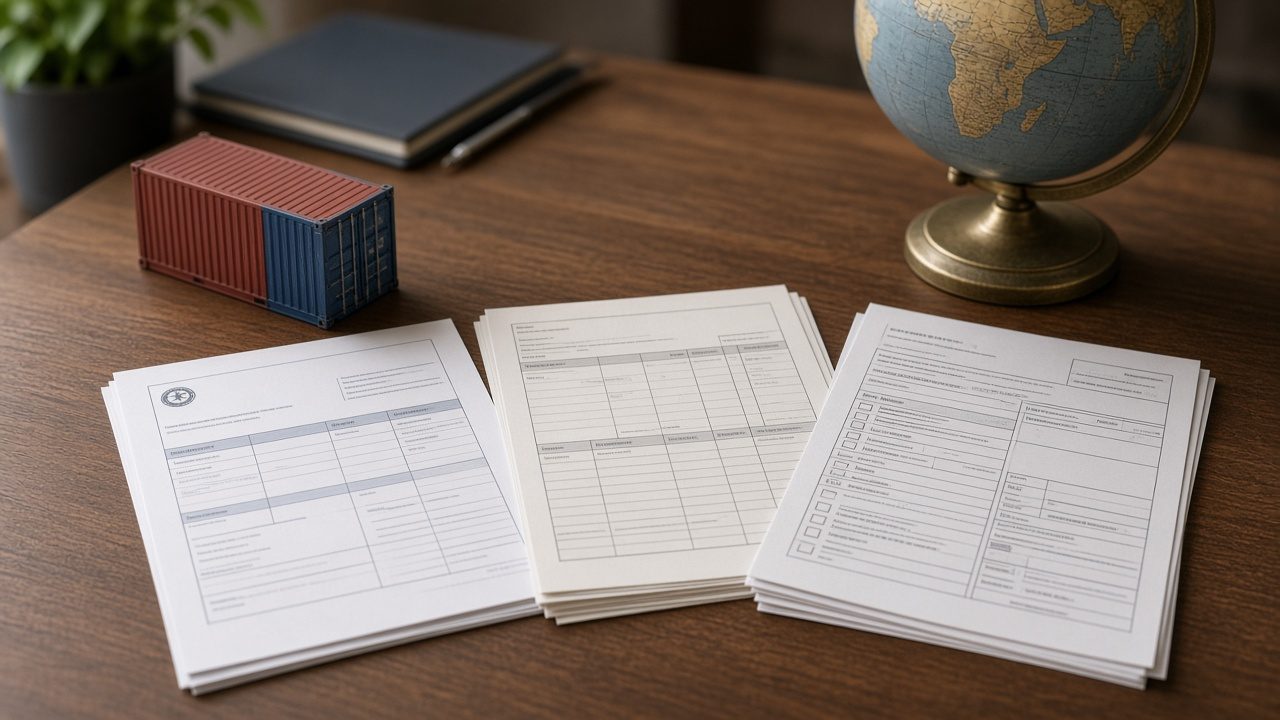
Enforcement Decree Article 101 requires type-specific attachments with the preliminary or final VAT return. For a direct export (Art. 21(2)(1)), file the export performance statement prescribed by Ministry of Finance and Economy ordinance; for parcel post, a parcel receipt. For intermediary trade and similar (item 2), a copy of the export contract or a foreign-exchange bank deposit certificate, among others. For local L/C or purchase confirmation deals opened or issued through the electronic trade platform, attach the electronic issuance statement; for any other local L/C, attach a copy of the L/C.
Direct exports are exempt from issuing a tax invoice (Enforcement Decree Art. 71), but local L/C or purchase confirmation supplies require a zero-rate tax invoice. Customs duty drawback is a separate regime—zero-rate VAT papers alone do not close a Korea export duty drawback claim.
How does input VAT work on a zero-rate export? (example)
The figures below are illustrative only. They are not a published rate and omit FX conversion and other sales.
Assume a domestic purchase of KRW 11 million (supply value KRW 10 million + VAT KRW 1 million) and an export supply value of about KRW 20 million after FX conversion. Under the zero rate, output VAT is KRW 0; related input VAT of KRW 1 million may be refundable if there are no other taxable sales. Real returns must reflect FX conversion, apportionment of common inputs, and other taxable or exempt sales—confirm with NTS guidance or a tax adviser.
What mistakes are common when filing zero-rate VAT?
Missing or late attachments can mean that zero-rate portion is not treated as a preliminary or final return. Skipping the zero-rate tax invoice on a local L/C deal, misdating the time of supply (the shipment date for exported goods, Enforcement Decree Art. 28) across tax periods, and incomplete FX deposit proof on intermediary-type deals are recurring errors.
Filing usually means submitting the preliminary or final VAT return through Home Tax (or equivalent) together with the attachments. Screen paths and forms change, so follow current NTS instructions or a tax professional.
FAQ
How does a direct export differ from a local L/C deal?
A direct export ships goods abroad with an export declaration, and direct exports are exempt from issuing a tax invoice (Enforcement Decree Art. 71). A local L/C or purchase confirmation supply stays domestic but still takes the zero rate and requires a zero-rate tax invoice.
What if you do not attach the supporting documents?
Under Article 56 of the Value-Added Tax Act, that zero-rate portion is not treated as a preliminary or final return. Input VAT refunds can be delayed or limited.
Does every export get the zero rate automatically?
No. You must meet the statutory conditions and attach the right papers. Selling abroad alone is not enough—the transaction must be a defined export or foreign-exchange earning supply.
When is the input VAT refund paid?
A general refund is paid within 30 days after the final return deadline; if you apply for an early refund on zero-rated supplies, it is paid within 15 days after the filing deadline (VAT Act Art. 59). Review results can change the outcome.
Sources
Related posts
RVC vs CTC: Which Origin Rule Applies to Your Product?
To claim FTA preferential tariffs you must meet the product-specific rule of origin. What do the tariff-shift (CTC) and value-content (RVC) rules check?
Korea Import Customs Value: Is the Invoice Enough?
Korean import duty is charged on customs value, which can differ from the invoice. Additions, deductions, the customs exchange rate and a worked example.
ATA Carnet: Do You Pay Duty on Temporary Exports?
How an ATA Carnet lets samples, fair exhibits and professional gear in duty-free: one-year validity, applying in Korea, and common mistakes.
Bonded Warehouse Korea: When Do You Pay Duty?
No duty is due when goods enter a Korean bonded warehouse; pay within 15 days of tax-return acceptance. Storage limits, the 30-day rule, surcharges.
Collaboration & consulting: contact@silenseatrading.com
More in Export & Import Practice: Shipping & Incoterms · Trade & Economic Glossary