
20 Korean Foods to Try on Your First Trip
Twenty easy-to-order Korean dishes for first-time visitors, from bibimbap and barbecue to street snacks, with spice notes and a sample order.
Contents
- Key takeaways
- Which rice and noodle dishes should you try?
- Which grilled and braised meat dishes should you try?
- Which stews, soups and pancakes should you try?
- Which street foods and everyday staples should you try?
- How do you order, and what does a sample budget look like?
- What are the common mistakes when trying Korean food?
- FAQ
- What Korean food is mild for first-timers?
- Is kimchi always very spicy?
- Do I need to tip at restaurants in Korea?
- Can I find these dishes outside Seoul?
- Sources
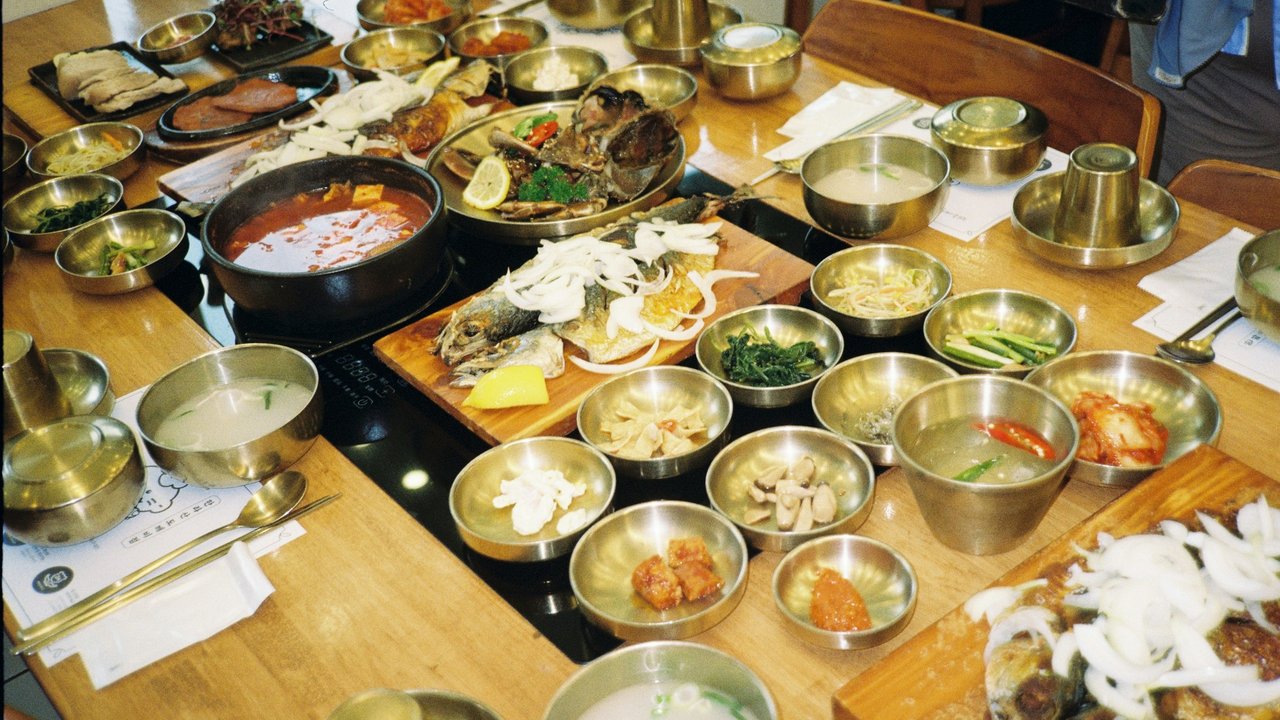
The best Korean foods to try on a first trip are the everyday dishes you will see in markets, casual restaurants and street stalls: bibimbap, bulgogi, Korean barbecue, kimchi stew, tteokbokki and a handful of others. The 20 dishes below run from mild rice bowls to spicy stews, and none of them needs special knowledge to order.
Key takeaways
- Start with mild dishes such as bibimbap, bulgogi and gimbap, then try kimchi stew and tteokbokki once you know your spice tolerance.
- Most meals come with small side dishes (banchan), and many restaurants refill them for free.
- Carry a little cash for small market stalls; cards are accepted at most sit-down restaurants.
Which rice and noodle dishes should you try?
Start with bibimbap, gimbap, japchae and naengmyeon. They cover warm rice bowls, easy snacks, mild noodles and cold summer noodles.
- Bibimbap. Warm rice topped with seasoned vegetables, often an egg and a spoonful of gochujang (red chili paste). Mix everything well before eating, and ask for the chili paste on the side if you prefer it mild.
- Gimbap. Rice and fillings rolled in seaweed and sliced. It is cheap, filling and easy to eat on the go, which makes it a good train snack.
- Japchae. Glass noodles made from sweet potato starch, stir-fried with vegetables and a light soy seasoning. It is usually mild and often served as a side dish.
- Naengmyeon. Chewy cold noodles, either in an icy broth (mul naengmyeon) or with a spicy sauce (bibim naengmyeon). It is especially popular in summer.
Which grilled and braised meat dishes should you try?
Bulgogi, samgyeopsal, galbi, galbijjim, dakgalbi and samgyetang are the classic meat dishes. Many are grilled or cooked at your table.
- Bulgogi. Thin slices of beef marinated in soy sauce, sugar and sesame, then grilled or pan-cooked. Sweet, savory and rarely spicy.
- Samgyeopsal. Pork belly grilled at your table. Wrap a piece in lettuce with garlic and ssamjang (a thick dipping paste) and eat it in one bite.
- Galbi. Marinated short ribs, usually beef or pork, grilled at the table.
- Galbijjim. Braised short ribs simmered with vegetables in a sweet soy sauce, a richer and softer cousin of galbi.
- Dakgalbi. Spicy stir-fried chicken with cabbage and rice cakes, cooked in a large pan at the table. Many places finish the leftovers with fried rice.
- Samgyetang. A small whole chicken stuffed with sticky rice and ginseng, simmered in a mild broth. Koreans traditionally eat it on the hottest days of summer.
Which stews, soups and pancakes should you try?
Kimchi jjigae, doenjang jjigae, sundubu jjigae, haemul pajeon and mandu are everyday comfort food. Spice levels range from mild to fiery.
- Kimchi jjigae. A spicy, sour stew of aged kimchi, tofu and usually pork. It is one of the most common home-style meals.
- Doenjang jjigae. A stew based on fermented soybean paste, earthy and savory rather than fiery.
- Sundubu jjigae. Soft tofu stew served bubbling in a stone pot. Many restaurants let you choose the spice level.
- Haemul pajeon. A savory pancake with green onions and seafood, crisp at the edges and served with a soy dipping sauce.
- Mandu. Dumplings filled with meat, tofu, vegetables or kimchi, served steamed, fried or in soup.
Which street foods and everyday staples should you try?
Tteokbokki, eomuk, hotteok and Korean fried chicken are easy to find at stalls and shops. Kimchi comes with almost every meal.
- Tteokbokki. Chewy rice cakes in a sweet and spicy gochujang sauce, sold at stalls and snack shops everywhere.
- Eomuk. Fish cake on skewers, simmered in a hot broth that stalls often let you sip from a paper cup.
- Hotteok. A pan-fried pancake filled with brown sugar syrup and nuts. Let it cool for a moment, because the filling is very hot.
- Korean fried chicken. Usually fried twice for a crisp coating and offered plain, with a sweet-spicy glaze, or with soy-garlic sauce.
- Kimchi. Not a dish you order, but you will meet it at almost every meal. Napa cabbage kimchi is the classic; radish (kkakdugi) and cucumber versions are also common.
If you are curious, sundae (a Korean sausage made with glass noodles and pig’s blood) is often sold next to tteokbokki at markets.
How do you order, and what does a sample budget look like?
Many casual restaurants have picture menus or ordering kiosks, and some barbecue places require at least two portions per table.
Worked example (illustrative prices, check the menu). Two people share a casual lunch. If one bibimbap costs 11,000 KRW, one bulgogi set costs 16,000 KRW and two soft drinks cost 2,500 KRW each, the total is 11,000 + 16,000 + (2 × 2,500) = 32,000 KRW, or 16,000 KRW per person. An afternoon portion of tteokbokki from a stall adds a few thousand won more. Prices vary a lot by neighborhood, and market stalls are usually cheaper than sit-down restaurants.
What are the common mistakes when trying Korean food?
Most mistakes are about spice, side dishes and payment. Ask about the heat level and ingredients, and carry small notes for stalls.
- Ordering the spiciest stew or tteokbokki on day one without asking about the heat level.
- Not realizing that banchan are usually refilled; you can ask politely instead of ordering extra dishes.
- Assuming every stew is meat-free; broths often contain anchovy, beef or pork, so ask if you avoid meat or fish.
- Paying with a large note at a small stall that would prefer small bills.
FAQ
What Korean food is mild for first-timers?
Bibimbap with the chili paste on the side, bulgogi, gimbap, japchae and grilled samgyeopsal are generally mild. When ordering stews, you can ask for “deol maepge” (less spicy).
Is kimchi always very spicy?
Napa cabbage kimchi is moderately spicy for most visitors, while white kimchi and some radish or cucumber versions are milder. Try a small piece first.
Do I need to tip at restaurants in Korea?
Tipping is not customary in Korea. Pay the amount on the bill, usually at the counter on your way out.
Can I find these dishes outside Seoul?
Yes. All of them are common in Busan, Jeju and other cities, and many regions have their own local versions worth trying.
Sources
- Korea Tourism Organization, VISITKOREA official English website (Korean food and dining information): https://english.visitkorea.or.kr/
- Korean Food Promotion Institute, Hansik official website: https://www.hansik.or.kr/
- Seoul Metropolitan Government, official English website: https://english.seoul.go.kr/
Last checked: 2026-10-10
Related posts

Korea Travel Apps: Which Should You Install Before You Fly?
The apps that make a first trip to Korea easier: local map apps, taxi apps, translation, and official train booking, plus what to set up before you fly.

Business Trip to Seoul: What to Sort Out Before You Fly
A business trip checklist for Seoul: entry forms, meeting etiquette, business cards, airport transfer, daily logistics and a simple local cost estimate.

Jeju Island for First-Timers: Where Should You Stay and Go?
A first-timer guide to Jeju Island: where to stay, the main areas, Hallasan rules, buses versus rental cars, and what drivers need before renting.

Busan 3-Day Itinerary: What Should First-Timers See?
A 3-day Busan itinerary for first-timers: Gamcheon Culture Village, Jagalchi Market, Haeundae and Haedong Yonggungsa, grouped by area by public transport.
Collaboration & consulting: contact@silenseatrading.com
More in Korea Guide: Export to Korea: Market Guide