
Busan Port Guide for Importers: Which Terminal Will You Use?
Busan Port for importers: North Port vs New Port, typical transit times to the US, cut-offs and documents, and how to plan container loads from Korea.
Contents
- Key takeaways
- How the port is organized
- Transit times
- Planning container loads
- Documents, cut-offs and practical tips
- Common mistakes
- FAQ
- How long does it take to ship a container from Busan to the USA?
- Which terminal will my container use in Busan?
- Is Busan a good port for transshipment cargo?
- Where can I find official Busan Port information?
- Sources
Busan Port is Korea’s main container gateway and one of Northeast Asia’s largest transshipment hubs. Most importers of Korean goods ship from here, whether to the US West Coast, to Europe or onward through other hubs. Container traffic is split between the newer Busan New Port and the older North Port, and the terminal your cargo uses depends on the shipping line’s service.
Key takeaways
- Much deep-sea container traffic now uses Busan New Port; always get the exact terminal from your carrier or forwarder.
- Busan to the US West Coast often takes about 10–15 days port to port on direct services; East Coast routings take much longer.
- Missing a documentation or cargo cut-off usually means rolling to the next sailing, so plan backward from the cut-off.
How the port is organized
Busan Port has two main container areas:
- North Port: the historic harbor close to central Busan, with several container terminals and piers.
- Busan New Port: the newer, larger complex west of the city, where many deep-sea container services now call.
The Busan Port Authority (BPA) manages port infrastructure and development, including logistics parks inside the port’s free trade zone. Each container terminal is run by its own operator, with its own gate procedures and online services.
Terminal assignment depends on which shipping line and service you book. Your carrier or forwarder will tell you:
- the terminal name and gate address
- the vessel and voyage number
- the documentation, VGM (verified gross mass) and cargo cut-off times
Do not assume every service uses the same terminal.
Transit times
Transit times vary with the carrier, the routing, the weather and congestion. As a rough guide:
- Busan to the US West Coast (for example, Los Angeles/Long Beach): often about 10–15 days port to port on direct services.
- Busan to the US East Coast: often about 3–5 weeks, depending on whether the route goes through the Panama Canal, a transshipment hub or another routing.
- Busan to Northern Europe: usually several weeks.
These are indicative industry ranges, not official figures, and they are port-to-port times. Door-to-door delivery adds trucking in Korea, terminal dwell time, customs clearance and inland delivery at the destination. For a cost comparison between modes, see shipping from Korea: sea vs air freight.
Planning container loads
Choosing between full container load (FCL) and less than container load (LCL) starts with volume (see FCL vs LCL explained and our 20ft, 40ft and 40HC container guide). Commonly quoted internal capacities are roughly 33 cubic meters (CBM) for a 20-foot container and roughly 67 CBM for a 40-foot container; check your carrier’s equipment specs. In practice, you can load less than that because of carton sizes and pallets.
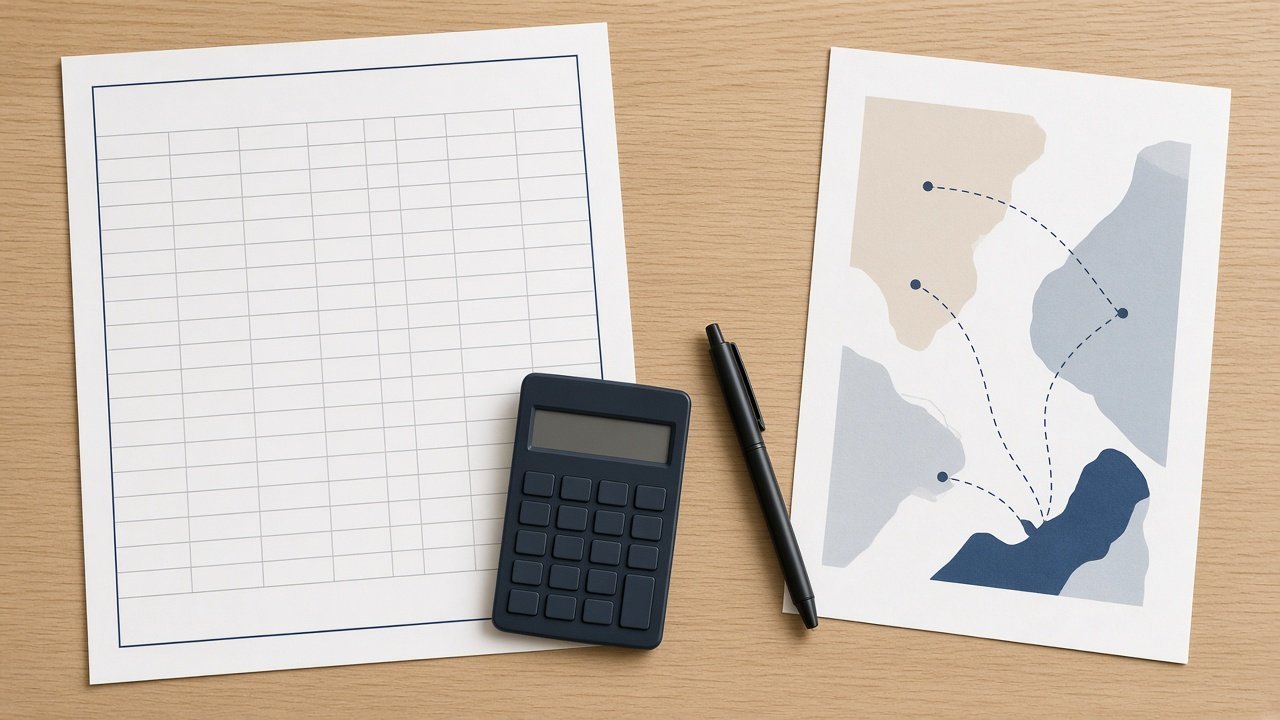
Worked example (illustrative). Your order is 900 cartons of 0.03 CBM each.
- Total volume: 900 × 0.03 = 27 CBM.
- A 20-foot container (about 33 CBM nominal, perhaps 26–28 CBM usable with your cartons) is borderline.
- A 40-foot container would be under half full (27 ÷ 67 ≈ 40%).
In this case, a full 20-foot container, possibly with a slightly smaller order, is likely more economical than LCL. Ask your forwarder to compare a 20-foot FCL quote with a 27 CBM LCL quote.
Documents, cut-offs and practical tips
Standard documents:
- commercial invoice
- packing list
- bill of lading
- any required certificates, such as a certificate of origin if you will claim FTA rates, or phytosanitary certificates
Cut-offs. Carriers set separate deadlines for documentation, VGM and cargo delivery to the terminal. Build in a buffer, especially around Korean public holidays.
Before you book:
- Make sure the supplier is legitimate; see how to verify a Korean supplier before you pay.
- If you will claim preferential duty, confirm the FTA rules of origin in advance.
Storage and processing. If goods will be stored or processed in a port logistics park, confirm the free-trade-zone procedures with your forwarder or the BPA.
Common mistakes
- Booking without confirming the terminal and cut-off times, then missing the sailing.
- Treating a quoted transit time as guaranteed instead of a typical range.
- Shipping before verifying that the Korean supplier’s registration is active.
- Ignoring free-trade-zone procedures when goods will be stored or processed inside the port area.
FAQ
How long does it take to ship a container from Busan to the USA?
Direct services to the US West Coast often take about 10–15 days port to port. East Coast routings usually take several weeks. Check the specific vessel schedule with your forwarder.
Which terminal will my container use in Busan?
That depends on the shipping line and service. Your carrier or forwarder will give you the terminal, gate details and cut-off times when you book.
Is Busan a good port for transshipment cargo?
Yes. Busan is a major transshipment hub as well as Korea’s main export port. Many services to secondary ports connect through it.
Where can I find official Busan Port information?
The Busan Port Authority website has port overviews and notices, and terminal operators publish their own schedules. For customs matters, the Korea Customs Service UNI-PASS system is the official platform.
Sources
- Busan Port Authority, official English website: https://www.busanpa.com/eng/
- Korea Customs Service, UNI-PASS: https://unipass.customs.go.kr/
- Korea Ocean Business Corporation (KOBC), official website: https://www.kobc.or.kr/
Last checked: 2026-10-30
Related posts
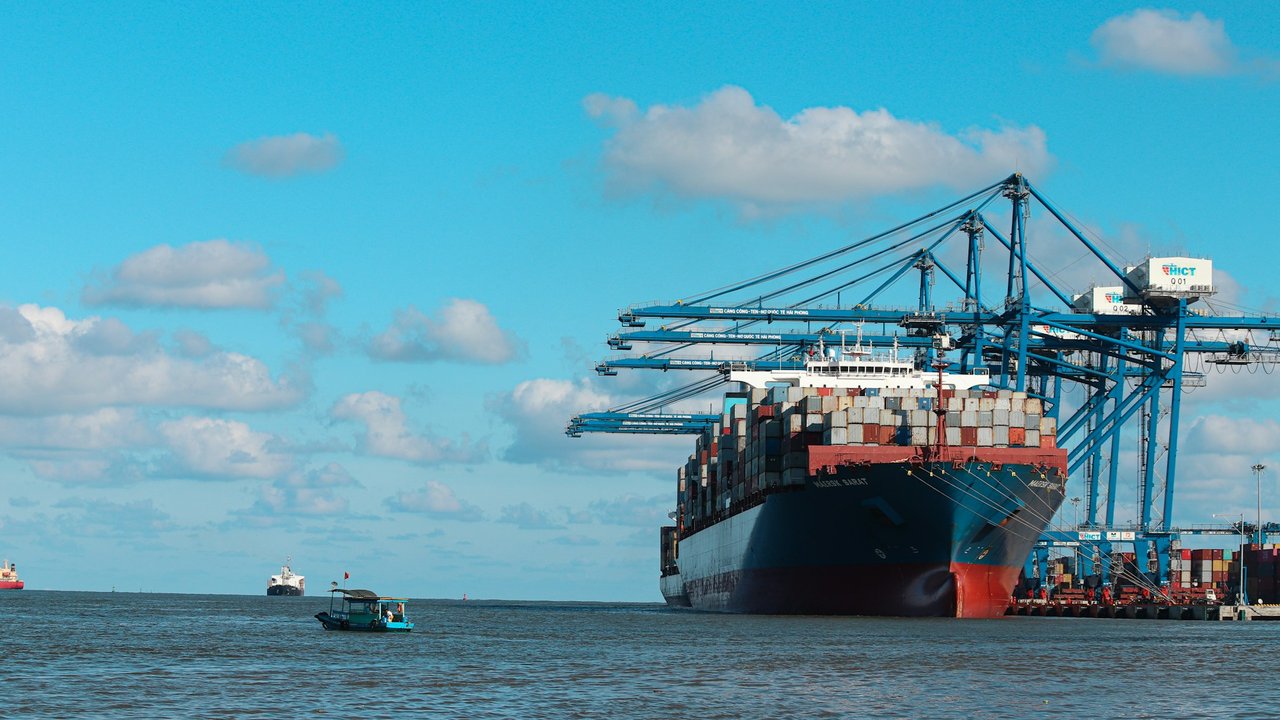
Shipping from Korea: Sea vs Air Freight Costs
Sea or air freight from Korea? What makes up the cost, typical transit times from Busan and Incheon, chargeable weight math and when each mode makes sense.
Korea Sourcing MOQ and Pricing: What Should You Expect?
How minimum order quantities and pricing work with Korean suppliers: what drives MOQ, what a quote includes, how to negotiate, and a worked cost example.

Korea FTA Rules of Origin: Does Your Product Qualify?
How Korea FTA rules of origin work for buyers: origin criteria, who certifies origin, finding product-specific rules, and a regional value content example.
Verify a Korean Supplier: What to Check Before You Pay
Verify a Korean supplier before paying: check business registration status with the National Tax Service, review the court registry, match every document.
Collaboration & consulting: silenseatrading@gmail.com
More in Korea Guide: Korea Travel Guide