
Shipping from Korea: Sea vs Air Freight Costs
Sea or air freight from Korea? What makes up the cost, typical transit times from Busan and Incheon, chargeable weight math and when each mode makes sense.
Contents
- Key takeaways
- What do you actually pay for when shipping from Korea?
- What are typical sea and air transit times?
- How do sea and air compare for 500 kg, 2 CBM? A worked example
- When should you choose sea or air?
- What are the common sea vs air shipping mistakes?
- FAQ
- How much does it cost to ship from Korea to the USA?
- Is sea freight always cheaper than air from Korea?
- What is the KCCI?
- Do I need a freight forwarder to ship from Korea?
- Sources
Sea freight is usually the cheaper way to ship bulk orders from Korea. Air freight suits small, high-value or urgent cargo. The right choice depends on your shipment’s volume, weight and value, and on how soon you need the goods.
Key takeaways
- Sea freight is priced per container (FCL) or per cubic meter (LCL), plus charges at both ends.
- Air freight is priced on chargeable weight, the higher of actual and volumetric weight, and costs far more per kilogram.
- Rates change weekly; use published indices for orientation only and always ask for dated quotes.
What do you actually pay for when shipping from Korea?
The freight line on a quote is only part of the total. A full shipment usually includes:
- Origin charges in Korea: pickup from the factory, export customs clearance, terminal handling and documentation.
- Main freight: the ocean or air carriage itself, plus fuel and security surcharges.
- Destination charges: terminal handling, import customs brokerage, duties and taxes, storage if you exceed free time, and delivery to your warehouse.
How sea freight is priced
- FCL (full container load): a price per 20-foot or 40-foot container.
- LCL (less than container load): a price per cubic meter (CBM), with your cargo sharing a container with other shippers.
How air freight is priced. Air freight uses chargeable weight. Many forwarders work out volumetric weight as length × width × height in cm ÷ 6,000, which is about 167 kg per CBM. They then charge on whichever is higher, the volumetric or the actual weight.
Your Incoterm, such as EXW, FOB or CIF, decides which of these charges you pay and which the supplier pays. Always check what a quote includes: port-to-port, door-to-door or something in between.
What are typical sea and air transit times?
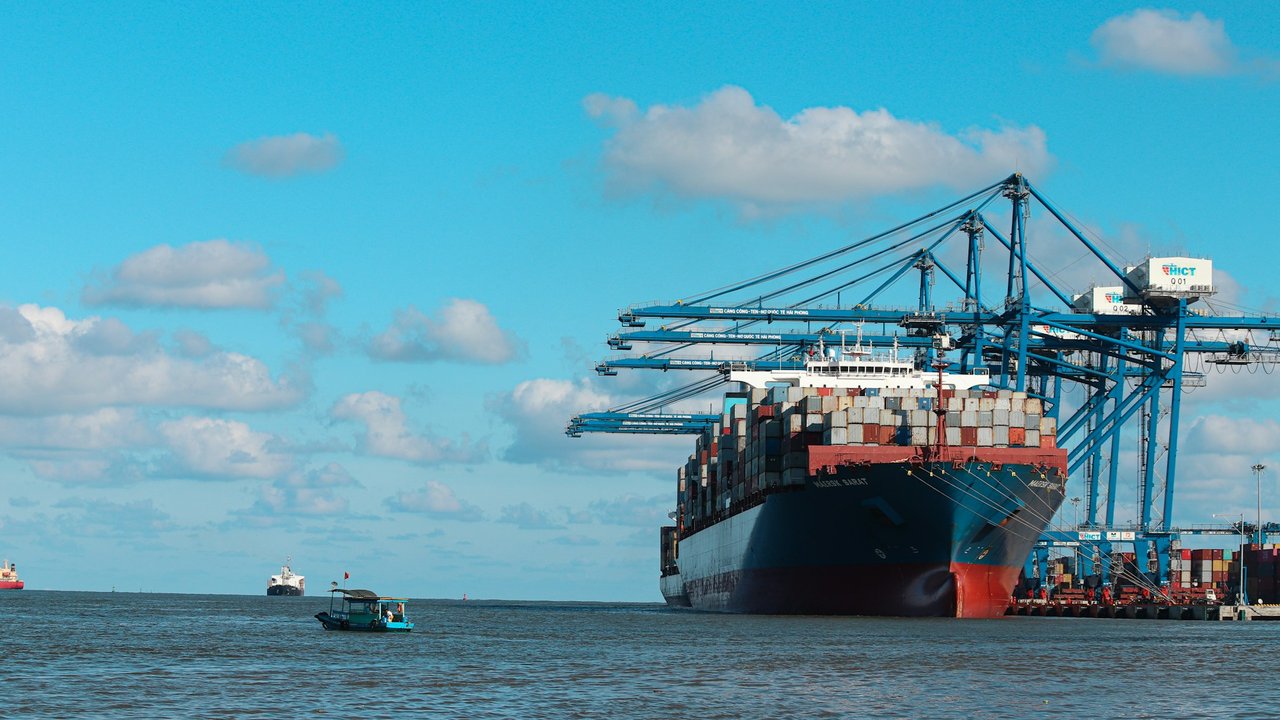
Sea from Busan often takes about 12–20 days to the US West Coast and several weeks to Europe, port to port. Air from Incheon often takes about 3–7 days door to door for consolidated services.
- Sea, Busan to the US West Coast: often about 12–20 days port to port, depending on the service. Allow extra days for loading, customs and inland delivery.
- Sea, Busan to Europe: usually several weeks, depending on the route and the schedule.
- Air, from Incheon: often about 3–7 days door to door for consolidated services, and faster for express services.
Freight markets move with demand, fuel prices and disruptions on major routes. The Korea Ocean Business Corporation (KOBC) publishes the KCCI, a weekly index of container spot rates from Busan, which is useful for tracking trends. Index levels change every week, so use them for orientation, not budgeting, and ask forwarders for dated quotes.
How do sea and air compare for 500 kg, 2 CBM? A worked example
The rates below are assumptions for illustration only.
Air freight
- Volumetric weight: 2 CBM × 167 kg ≈ 334 kg.
- The actual weight of 500 kg is higher, so the chargeable weight is 500 kg.
- Freight at an assumed 5 USD/kg: 500 × 5 = 2,500 USD.
- Handling at both ends: about 300–500 USD.
- Total: roughly 2,800–3,000 USD.
Sea freight (LCL)
- Freight at an assumed 80 USD/CBM: 2 × 80 = 160 USD.
- Fixed charges at both ends: about 400–600 USD.
- Total: roughly 560–760 USD.
On these numbers, air costs about four times as much. Sea, however, takes weeks longer. If a stockout would cost you more than the difference, air can still be the right call. Rerun the calculation with real quotes, because surcharges move constantly.
When should you choose sea or air?
Choose sea for:
- planned restocking of non-perishable, heavy or lower-value goods
- shipments of several cubic meters or more
- goods where a few extra weeks in transit do not hurt sales
Choose air for:
- samples and pre-production approvals
- product launches and urgent restocks
- goods with a high value relative to their weight
Many importers combine the two: sea for the main volume and air for the first batch or emergencies. For product-specific advice, see how to import Korean food products.
What are the common sea vs air shipping mistakes?
Most mistakes come from treating the freight line as the full cost or budgeting with old figures. Get fresh, dated quotes and check volumetric weight and free time.
- Treating the freight line as the full landed cost and ignoring handling, storage and inland delivery.
- Budgeting with an old index figure instead of a fresh, dated quote.
- Underestimating volumetric weight on bulky but light air shipments.
- Booking LCL without checking free time and storage charges at the destination.
FAQ
How much does it cost to ship from Korea to the USA?
It depends on the mode, the volume and the week you ship. Container rates from Busan are tracked weekly by indices such as the KCCI, while air freight is priced per chargeable kilogram and costs much more. Ask forwarders for dated quotes.
Is sea freight always cheaper than air from Korea?
For most commercial volumes above a few hundred kilograms, yes. For very small or very urgent shipments, the gap narrows, and air can win once you count the cost of lost sales.
What is the KCCI?
The KCCI is a weekly container freight index published by the Korea Ocean Business Corporation. It tracks spot rates from Busan on major routes. It is a market reference, not a price you can book.
Do I need a freight forwarder to ship from Korea?
Most importers use one to handle booking, export documents and coordination with carriers. Large shippers sometimes book directly with carriers, but that is uncommon for typical orders.
Sources
- Korea Ocean Business Corporation (KOBC), official website with the KCCI container freight index: https://www.kobc.or.kr/
- Busan Port Authority, official English website: https://www.busanpa.com/eng/
- Incheon International Airport Corporation, official English website: https://www.airport.kr/ap_en/index.do
Last checked: 2026-10-10
Related posts

KC Certification in Korea: Does Your Product Need It?
KC certification for exporters: which agencies handle safety and radio/EMC, the risk-based levels, the usual steps, and how to plan time before launch.
Selling on Coupang as a Foreign Seller
How overseas businesses join Coupang Marketplace: who can register, documents usually requested, how fees work, and Korean product rules that apply.

How to Import Korean Food Products: A Buyer's Guide
How overseas buyers import Korean food: finding suppliers, documents to request, why destination food rules decide entry, and a landed-cost example.

How to Import K-Beauty Products from Korea
A buyer's guide to importing K-beauty from Korea: Korean MFDS basics, US FDA MoCRA registration and listing, EU CPNP notification and landed-cost planning.
Collaboration & consulting: contact@silenseatrading.com
More in Korea Guide: Korea Travel Guide