
Selling on Coupang as a Foreign Seller
How overseas businesses join Coupang Marketplace: who can register, documents usually requested, how fees work, and Korean product rules that apply.
Contents
- Key takeaways
- Who can sell on Coupang from overseas, and what rules still apply?
- How do you register as a Coupang global seller?
- How much does Coupang charge foreign sellers?
- What customs rules affect Korean buyers of cross-border orders?
- How can foreign sellers succeed on Coupang?
- What mistakes should foreign sellers avoid?
- FAQ
- Can a foreign company sell on Coupang without a Korean business registration?
- Is there a fee to open a Coupang seller account?
- How long does Coupang seller approval take?
- What documents do I need to register on Coupang?
- Sources
Overseas businesses can apply to sell on Coupang Marketplace through its global seller program, usually with documents from their home country instead of a Korean company registration. According to Coupang’s official global seller pages, there is no sign-up fee, and the main cost is a category-based sales commission (for example 10.80% in many categories and 7.80% for digital appliances). Korea’s product rules, such as KC certification for many electrical goods, still apply wherever the seller is based.
Key takeaways
- The global seller program is built for overseas businesses, and a Korean entity is generally not needed to register.
- Expect to provide a business license, proof of identity, a bank statement and proof of business ownership. Approval usually takes up to 5 business days if all documents are correct.
- Commissions vary by category, and a 3% processing fee applies to shipping charges, so check the current official fee schedule before you set prices.
Who can sell on Coupang from overseas, and what rules still apply?
Coupang’s global seller program accepts businesses from many countries, and its sign-up pages and support are available in English. After approval, sellers manage listings, orders and settlements through Coupang’s seller system.
Registering does not exempt your products from Korean regulations:
- Electrical products and children’s products may need KC safety certification, which falls under the Korean Agency for Technology and Standards (KATS). Its Product Safety Information Center (safetykorea.kr) lists certification and recall information. See our guide to KC certification in Korea.
- Radio and broadcasting/communication equipment (for example wireless and EMC-relevant devices) goes through conformity assessment run by the National Radio Research Agency (RRA). Some products need both.
- Food, cosmetics and health products fall under Ministry of Food and Drug Safety rules, including labeling requirements.
- Restricted or prohibited items cannot be listed at all. See Coupang’s official restricted products list.
Check category rules before you invest in listings or stock. For classification basics, see our HS code guide for exporters.
How do you register as a Coupang global seller?
- Create a seller account on Coupang’s official global seller site and verify your email.
- Enter your business details and upload documents. Coupang’s FAQ lists four: a business license, proof of identity (such as a passport), proof of business ownership and a bank statement.
- Complete identity and payment verification (KYC) so that payouts can be released.
- Start listing. Once approved, you can match existing product listings or create new ones.
According to Coupang’s FAQ, sign-up usually takes up to 5 business days if all documents are correctly submitted. Incomplete or inconsistent documents are the most common cause of delays.
How much does Coupang charge foreign sellers?
Coupang’s official materials state that there is no sign-up fee. The main cost is a sales commission that depends on the product category. Examples from Coupang’s official pricing page:
- Many categories (furniture, books, sports, toys, kitchenware, pet supplies and others): 10.80% standard fee
- Digital appliances: 7.80% standard fee
- Games: 6.80%
- Air conditioning and heating appliances: 5.80%
- Beauty: 9.60%; Fashion: 10.50%
There is also a 3% processing fee on shipping charges that you set (the fee applies to the shipping charge, whether you absorb it or the customer pays it). Advertising is optional and priced separately. Coupang may update rates, so confirm your category’s rate in the official fee page or your seller account before you set prices.
Worked example (official 10.80% standard rate). You sell an item for 30,000 won with free shipping.
- Category commission of 10.80%: 30,000 × 0.108 = 3,240 won.
- Your cross-border shipping cost per unit: 6,000 won (your own logistics quote, illustrative).
- Product cost: 12,000 won (illustrative).
- Contribution margin before returns and ads: 30,000 − 3,240 − 6,000 − 12,000 = 8,760 won, a 29.2% margin.
If you charged the customer a separate 3,000 won shipping fee, the 3% processing fee would add 90 won. In a 7.80% category such as digital appliances, the commission on the same 30,000 won item would be 2,340 won. Replace the illustrative costs with your actual product cost and logistics quote.
What customs rules affect Korean buyers of cross-border orders?
If you ship directly from abroad to a Korean shopper, the parcel clears Korean customs as an express shipment. According to the Korea Customs Service (KCS):
- List clearance (목록통관): goods for personal use priced at US$150 or less (US$200 or less for goods shipped from the US) can clear by submitting a shipment list, without an import declaration, unless they are on the excluded list. Excluded items include medicines, health functional foods, food, alcohol and tobacco, some cosmetics, and certain radio equipment.
- Personal Customs Clearance Code: for personal express shipments, the recipient’s correct Personal Customs Clearance Code (개인통관고유부호) must be submitted.
- Simplified import declaration: goods above US$150 (US$200 from the US) and up to US$2,000 can use a simplified declaration; above US$2,000 a general import declaration is required.
- Duty and VAT: when an import declaration is filed, personal-use goods priced at US$150 or less are exempt from duty and VAT. Above US$150, duty and VAT apply to the full taxable value, with no deduction.
The “item price” includes taxes, inland freight and insurance in the shipping country. KCS offers an estimated tax calculator for cross-border purchases. Your own Korean VAT obligations as a foreign seller are a separate question; check with the National Tax Service or a tax adviser.
How can foreign sellers succeed on Coupang?
- Localize your listings. Korean shoppers expect Korean product titles, descriptions and detailed images. Machine translation alone often reads poorly. Coupang does not offer translation services but has multilingual seller support.
- Get certifications first. Have KC or other required approvals in place before you list.
- Plan delivery times. Korean shoppers are used to very fast domestic delivery. Coupang’s FAQ says its FBA-style fulfillment service is currently available only to sellers based in China; other sellers are directed to Coupang’s Service Provider Network for logistics partners.
- Watch service metrics. Return handling and customer response times affect your performance on the platform.
- Use official resources. Rely on the seller help center and the support contacts listed on Coupang’s site.
If you also need to source products in Korea, see how to find Korean manufacturers and suppliers. For understanding local buyers, read what makes Korean customers unique.
What mistakes should foreign sellers avoid?
- Assuming one commission rate applies to every category.
- Forgetting the 3% processing fee on shipping charges.
- Listing regulated products without the required Korean certification.
- Submitting business documents with inconsistent names or addresses, which delays approval.
- Leaving KYC or bank details incomplete, which blocks payouts.
FAQ
Can a foreign company sell on Coupang without a Korean business registration?
Generally yes. The global seller program lets overseas businesses register with documents from their home country. Korean product certifications still apply.
Is there a fee to open a Coupang seller account?
No. Coupang’s official FAQ states there are no sign-up fees. Costs come mainly from category commissions on sales (for example 10.80% in many categories), a 3% processing fee on shipping charges, and any advertising you choose.
How long does Coupang seller approval take?
Coupang’s FAQ says sign-up usually takes up to 5 business days if all documents are correctly submitted.
What documents do I need to register on Coupang?
Four documents: a business license, proof of identity, proof of business ownership and a bank statement, followed by identity and payment verification.
Sources
- Coupang Marketplace, global sellers official site: https://globalsellers.coupang.com/en/
- Coupang Marketplace, global seller step-by-step guide: https://globalsellers.coupang.com/en/step-by-step-guide/
- Coupang Marketplace, global seller FAQ: https://globalsellers.coupang.com/en/faq/
- Coupang Marketplace, How Much Does Selling on Coupang Cost?: https://globalsellers.coupang.com/seller-university/how-much-does-selling-on-coupang-cost/
- Coupang Marketplace, Restricted Products: https://globalsellers.coupang.com/rules-and-policies/restricted-products/
- Korea Customs Service, express shipment clearance: https://customs.go.kr/kcs/cm/cntnts/cntntsView.do?cntntsId=819&mi=2821
- Korean Agency for Technology and Standards, Product Safety Information Center: https://www.safetykorea.kr/
- National Radio Research Agency (Korea), conformity assessment: https://www.rra.go.kr/
Last checked: 2026-10-15
Related posts

KC Certification in Korea: Does Your Product Need It?
KC certification for exporters: which agencies handle safety and radio/EMC, the risk-based levels, the usual steps, and how to plan time before launch.
Shipping from Korea: Sea vs Air Freight Costs
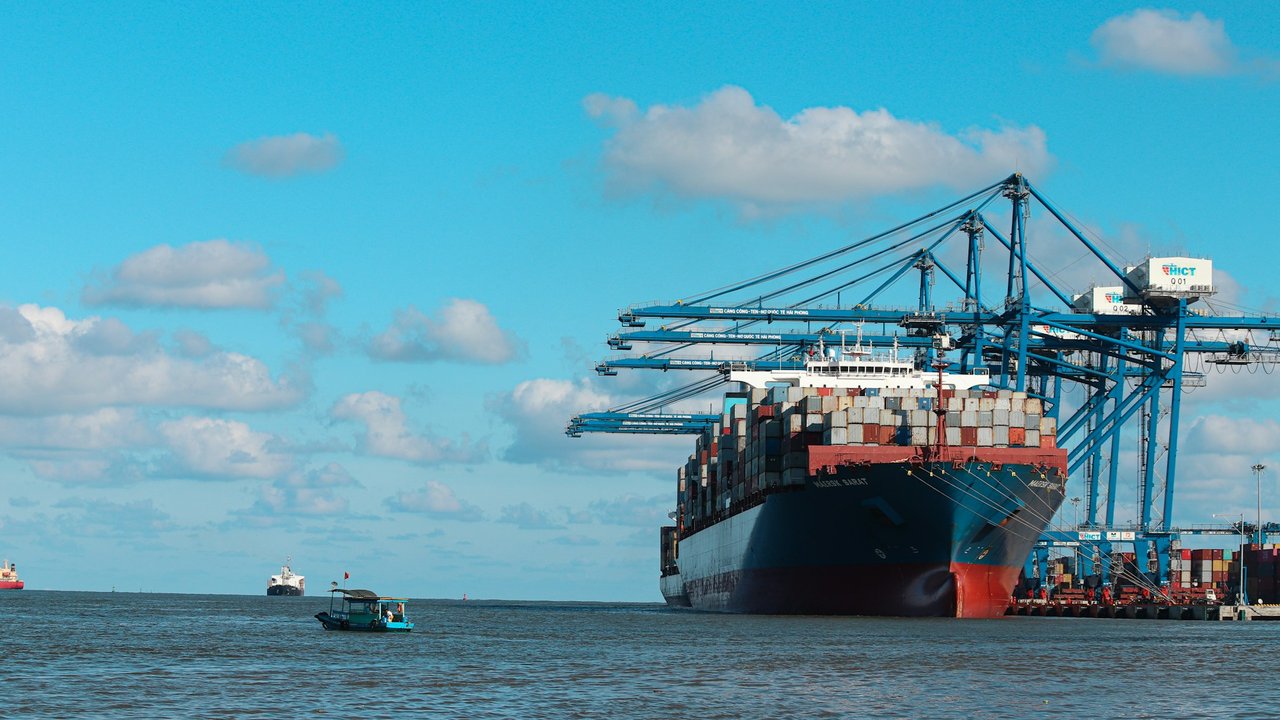
Sea or air freight from Korea? What makes up the cost, typical transit times from Busan and Incheon, chargeable weight math and when each mode makes sense.

How to Import Korean Food Products: A Buyer's Guide
How overseas buyers import Korean food: finding suppliers, documents to request, why destination food rules decide entry, and a landed-cost example.

How to Import K-Beauty Products from Korea
A buyer's guide to importing K-beauty from Korea: Korean MFDS basics, US FDA MoCRA registration and listing, EU CPNP notification and landed-cost planning.
Collaboration & consulting: contact@silenseatrading.com
More in Korea Guide: Korea Travel Guide