
ISPM 15 Explained: Wood Packaging Heat Treatment and Marks
ISPM 15 explained: the 56°C/30-minute heat treatment rule, how to read the IPPC mark, Korea's wood packaging import rules and common mistakes.
Contents
- Key takeaways
- What does ISPM 15 cover?
- What is regulated, and what is exempt?
- Which treatments are approved?
- How do you read and apply the IPPC mark?
- What does a practical example and pre-shipment checklist look like?
- What are the common ISPM 15 mistakes?
- FAQ
- What happens if the ISPM 15 mark is missing?
- Do plywood crates need treatment?
- Should I choose heat treatment or methyl bromide?
- Can treated pallets be reused?
- Sources
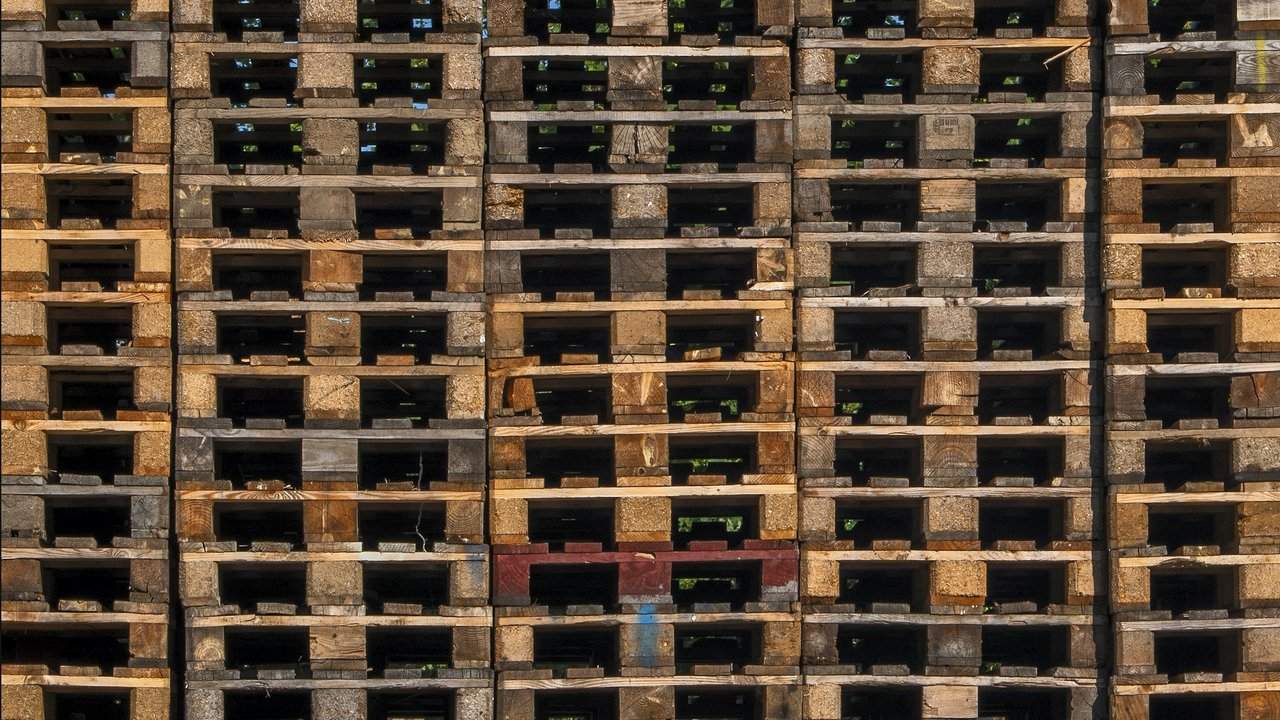
ISPM 15 is the international standard set under the International Plant Protection Convention (IPPC) for wood packaging material used in trade. If your goods travel on pallets, crates, or dunnage made from raw wood, that packaging must be treated and marked to ISPM 15. Otherwise it can be destroyed or sent back at the destination. The practical rule has three steps: debark the wood, apply an approved treatment, and affix a compliant IPPC mark.
Key takeaways
- ISPM 15 requires raw-wood packaging to be debarked, treated with an approved method, and marked, so that quarantine pests do not travel between countries.
- Heat treatment (HT) means the entire profile of the wood, including its core, must reach at least 56°C and stay there for 30 continuous minutes.
- Packaging made wholly of processed wood (plywood, particle board, OSB, veneer) or of thin wood 6 mm thick or less is exempt.
What does ISPM 15 cover?
ISPM 15 (International Standard for Phytosanitary Measures No. 15) was adopted under the IPPC, which is hosted by the FAO. Its purpose is to reduce the risk that wood packaging carries quarantine pests across borders. It was first adopted in 2002, fully revised in 2009, and its annexes have been updated several times since.
Korea has applied the standard to wood packaging on imported consignments since 1 June 2005 (by shipping date). The detailed rules are set in the Animal and Plant Quarantine Agency (APQA) notice on quarantine of wood packaging material for import and export cargo. The standard covers pallets, crates, boxes, dunnage, and cable drums used to support, protect, or carry goods.
What is regulated, and what is exempt?
Raw wood packaging is in scope. Whatever treatment is used, the wood must be debarked, but small, visually separate pieces of bark may remain if each piece is:
- less than 3 cm wide (of any length), or
- wider than 3 cm but with a surface area under 50 cm².
The following are low enough in risk to be exempt:
- packaging made entirely of thin wood, 6 mm thick or less
- packaging made wholly of processed wood produced with glue, heat, or pressure, such as plywood, particle board, oriented strand board (OSB), or veneer
- sawdust, wood shavings, and wood wool
- wood permanently attached to vehicles or containers
If a plywood crate also contains solid-wood blocks or dunnage, those solid-wood parts must be treated, and the crate is marked as one unit in a clearly visible place.
Which treatments are approved?
Annex 1 of ISPM 15 lists four approved treatments, each with its own code on the mark.
| Treatment | Mark code | Key condition |
|---|---|---|
| Heat treatment | HT | Entire profile including the core at 56°C or more for 30 continuous minutes |
| Dielectric heating | DH | Entire profile including the surface at 60°C or more for 1 continuous minute |
| Methyl bromide fumigation | MB | Wood and air at 10°C or more, minimum concentration-time (CT) met, exposure of at least 24 hours |
| Sulphuryl fluoride fumigation | SF | Wood at 20°C or more; minimum CT met in 24 hours at 30°C or more, or 48 hours at 20°C or more |
Heat treatment is the most common in practice. What counts is the temperature at the core of the wood, not the air in the chamber. Neither fumigation (MB or SF) may be used on packaging with a piece of wood whose smallest cross-section exceeds 20 cm. Methyl bromide is an ozone-depleting substance and the IPPC recommends replacing or reducing its use, so check what the importing country accepts before you choose a treatment.
How do you read and apply the IPPC mark?
A compliant mark has four elements:
- the IPPC symbol (a wheat sheaf, on the left)
- the two-letter ISO country code (KR for Korea)
- the unique number of the producer or treatment provider, assigned by the national plant protection organisation (in Korea, APQA)
- the treatment code (HT, DH, MB, or SF)
The mark sits inside a rectangular or square border, with a vertical line separating the symbol from the code elements. Nothing else goes inside the border; trademarks or logos may appear next to it, outside the border. The mark must be easy for an inspector to read with the naked eye, must not wear off, and must not be movable from one piece of packaging to another (ISPM 15, Annex 2: “legible, durable and not transferable”). It must be placed where it is visible in use, preferably on at least two opposite sides. Hand-drawn marks are not allowed. Avoid red and orange, because those colours are used for dangerous-goods labels.
| Element | Meaning | Example (hypothetical) |
|---|---|---|
| Symbol | IPPC wheat sheaf | (left panel) |
| Country code | ISO two-letter code | KR |
| Provider code | Number assigned by the plant protection organisation | 12345 |
| Treatment code | Method used | HT |
The mark is what shows that the packaging has undergone an approved treatment. Requirements can still differ by importing country, so confirm them before shipment.
What does a practical example and pre-shipment checklist look like?
Take a solid-wood pallet with 10 cm thick blocks that needs heat treatment. The probe in the core must show 56°C, and the reading must stay at or above 56°C for a full 30 minutes. If the core stays at 55°C, the treatment fails even when the chamber air is at 60°C. The work should be done by a registered facility, and the mark applied only after the treatment is verified.
Before export, check in this order:
- Is any raw wood used in the packaging?
- Is any remaining bark within tolerance (under 3 cm wide, or under 50 cm² per piece)?
- Did a registered facility apply an approved treatment such as HT?
- Is the mark clear and on two opposite sides?
- Does the importing country have any extra requirements?
Deciding the wood-packaging status early makes container loading and the packing list easier and reduces clearance delays. See also FCL vs LCL, commercial invoice vs packing list, and VGM meaning and submission.
What are the common ISPM 15 mistakes?
The common mistakes are relying on a KD stamp alone, unreadable marks, too much bark, ignoring destination rules and leaving old marks on repaired pallets. Any of these can get the wood packaging rejected.
- Relying on a KD stamp alone: KD (kiln-dried) is a moisture-reduction process. A drying run can meet the heat schedule, but a KD stamp by itself does not prove ISPM 15 treatment. You need an IPPC mark with a treatment code such as HT.
- Marking only one face, or using ink that fades: if the inspector cannot read the mark, it becomes a problem.
- Shipping wood with too much bark: even treated wood fails if bark exceeds the 3 cm / 50 cm² tolerance.
- Choosing a treatment without checking the destination: details can differ by importing country.
- Leaving only the old mark on a repaired or remanufactured pallet: follow the repair rules in the FAQ below.
FAQ
What happens if the ISPM 15 mark is missing?
The packaging fails inspection at the destination. For imports into Korea, under Article 12-2(1) of the Plant Protection Act the importer of wood packaging that was not treated, carries no mark, or does not meet the standard must report it to APQA without delay and destroy it. Failing to report or destroy it can lead to an administrative fine of up to KRW 5 million under Article 50(2)2, on top of the extra cost and delay.
Do plywood crates need treatment?
No. Packaging made wholly of processed wood such as plywood, particle board, OSB, or veneer is exempt. If the crate also contains solid-wood blocks or dunnage, those pieces must be treated.
Should I choose heat treatment or methyl bromide?
Heat treatment (HT) is the most widely used option. The IPPC recommends replacing or reducing methyl bromide (MB), so if you plan to use it, first confirm the importing country accepts it. Korea’s import quarantine accepts treatments that follow the IPPC standard, including heat treatment and methyl bromide fumigation.
Can treated pallets be reused?
Yes. Treated and marked packaging that has not been repaired, remanufactured, or otherwise altered does not need to be re-treated or re-marked. A repaired unit (up to about one third of the components replaced) may only be fixed with treated or processed wood, and each added treated piece must be marked. A remanufactured unit (more than about one third replaced) must have all earlier marks permanently removed, then be re-treated and marked again.
Sources
- IPPC, ISPM 15: Regulation of wood packaging material in international trade
- IPPC, ISPM 15 unofficial Korean translation (PDF)
- Animal and Plant Quarantine Agency, quarantine requirement on wood packaging of imported consignments
- Korea Law Information Center, wood packaging quarantine guidelines for import and export cargo (APQA notice 2024-57, Korean)
- Easy Law (Korean government legal guide), importing wood packaging (Korean)
Related: FCL vs LCL, Commercial invoice vs packing list, How to issue a certificate of origin
Related posts
RVC vs CTC: Which Origin Rule Applies to Your Product?
To claim FTA preferential tariffs you must meet the product-specific rule of origin. What do the tariff-shift (CTC) and value-content (RVC) rules check?

Korea Import Customs Value: Is the Invoice Enough?
Korean import duty is charged on customs value, which can differ from the invoice. Additions, deductions, the customs exchange rate and a worked example.
ATA Carnet: Do You Pay Duty on Temporary Exports?
How an ATA Carnet lets samples, fair exhibits and professional gear in duty-free: one-year validity, applying in Korea, and common mistakes.
Bonded Warehouse Korea: When Do You Pay Duty?
No duty is due when goods enter a Korean bonded warehouse; pay within 15 days of tax-return acceptance. Storage limits, the 30-day rule, surcharges.
Collaboration & consulting: contact@silenseatrading.com
More in Export & Import Practice: Shipping & Incoterms · Trade & Economic Glossary