
What Is THC? Terminal Handling Charges and Who Pays
THC explained: origin vs destination terminal handling charges, who pays under each Incoterms 2020 rule, and how to check THC on a freight quote.
Contents
- Key takeaways
- What is THC?
- How is origin THC different from destination THC?
- Who pays THC under each Incoterms rule?
- How do you calculate THC?
- What are the most common THC mistakes?
- FAQ
- Is THC calculated by cargo weight?
- Who pays origin THC under FOB?
- Is THC the same as demurrage?
- Where can I confirm the actual THC amount?
- Sources
THC stands for Terminal Handling Charge: the fee for the work a port terminal does to receive a container, move and store it in the yard, and load it onto a vessel, or to discharge it and send it out through the gate. It usually appears on quotes as a separate line from ocean freight, so if the contract does not say who pays it, exporters and buyers can end up pushing the invoice back and forth. This guide covers what THC is, who typically pays it, and how to work it out on a quote.
Key takeaways
- THC is the terminal’s fee for receiving, moving, storing and loading or discharging a container; origin THC and destination THC are charged separately.
- Who pays usually follows the cost allocation in Incoterms 2020 (articles A9/B9), but the sales contract and the carrier’s or forwarder’s terms are what finally decide it.
- Under FOB the seller typically pays origin THC and the buyer pays destination THC. Under CFR and CIF, destination THC is usually the buyer’s cost unless it is part of the seller’s contract of carriage.
- The amount depends on container size and type and on port and carrier tariffs, not cargo weight, so check each line on the quote.
- For example, Maersk’s destination THC for imports into Korea is KRW 150,000 for a 20 ft dry container and KRW 210,000 for a 40 ft or 40 ft HQ dry container at Busan, Incheon and Gwangyang (rates as of 17 April 2026).
What is THC?
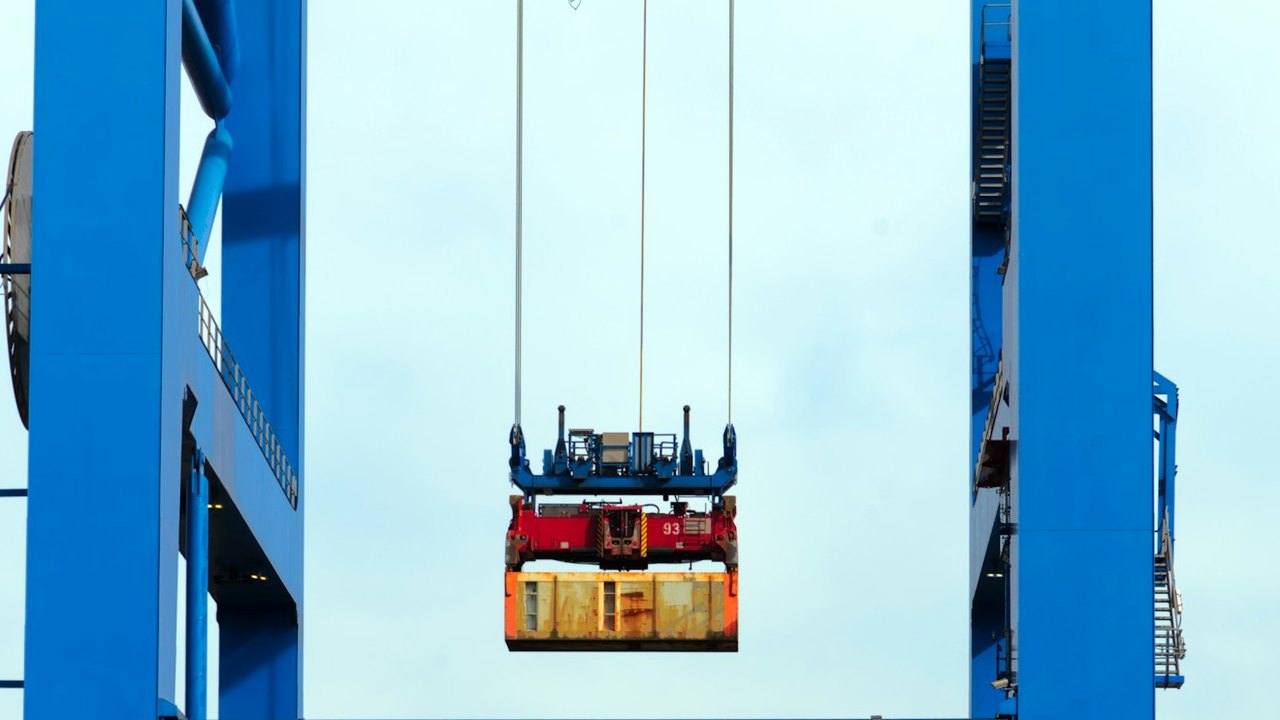
THC is the charge for the physical handling of a container at a container terminal. It covers gate-in, moves and storage in the yard, and the crane lift onto or off the vessel. It is separate from the ocean freight, and carriers often pass the terminal’s cost on to shippers or consignees as their own line item.
Carriers name it slightly differently. Maersk, for example, lists Terminal Handling Service Origin (OHC) and Terminal Handling Service Destination (DHC). FCL shipments are usually charged a flat rate per container, while LCL is usually charged per cubic metre or tonne (W/M), often with a separate CFS charge. For how the two load types differ, see FCL vs LCL shipments.
The terminal’s handling fee and the carrier’s THC are not the same charge. The terminal bills its handling fee to the carrier under its public tariff, and the carrier then bills THC to the shipper or consignee. That is why THC can differ between carriers using the same terminal.
In Korea, also check whether the wharfage fee (WFG) is billed separately from THC. Some carriers bill it separately and others include it; Maersk says it includes WFG in its THC. Other local charges, such as the documentation fee, CFS charges and container cleaning, are separate from THC.
How is origin THC different from destination THC?
Origin THC (OTHC) arises at the export terminal and destination THC (DTHC) at the import terminal. Because two terminals each do their own work, a single shipment normally carries two THC lines. If the route has a transshipment port, check whether the quote adds a separate transshipment handling line.
| Item | Where it arises | Main work | Who pays |
|---|---|---|---|
| Origin THC (OTHC) | Export terminal | Gate-in, yard moves and storage, loading | Depends on the trade term and contract |
| Destination THC (DTHC) | Import terminal | Discharge, yard moves and storage, gate-out | Depends on the trade term and contract |
Who pays THC under each Incoterms rule?
Incoterms 2020 groups each rule’s costs in articles A9 (seller) and B9 (buyer), and the basic principle is that the seller pays costs until delivery and the buyer pays costs after it. So who bears THC depends on whether delivery happens before or after the terminal work. The table shows typical practice for a container moving from an export terminal to an import terminal; the contract and the carriage terms decide the actual split.
| Rule | Origin THC | Destination THC |
|---|---|---|
| EXW | Buyer | Buyer |
| FCA | Usually buyer (work after the seller hands the goods to the carrier) | Buyer |
| FOB | Usually seller (seller’s costs run until the goods are on board) | Buyer |
| CFR, CIF, CPT, CIP | Seller | Usually buyer (seller if it is part of the seller’s contract of carriage) |
| DAP | Seller | Usually seller when the named place is beyond the port; usually buyer when it is the import terminal |
| DPU, DDP | Seller | Seller |
Even under FOB, some ports add origin THC to the buyer’s freight, so state in the contract who pays origin THC under FOB. Under DAP, if the named place is the import terminal, unloading costs are the buyer’s unless they are part of the seller’s contract of carriage (A9/B9).
Under CFR and CIF the seller pays the freight, but unloading costs at the port of discharge are the seller’s only if they are included in the seller’s contract of carriage; otherwise the buyer pays them. ICC also advises that FOB may not suit goods handed to the carrier at a terminal before loading, as with most container cargo, and that FCA is the better choice there. Carriers often bill origin THC to the shipper and destination THC to the consignee, so the party invoiced may not be the party who bears the cost under the Incoterms rule; write the settlement method into the contract. For where risk and cost pass under each rule, see the Incoterms 2020 summary.
How do you calculate THC?
THC is set by container size and type and by port and carrier tariffs, not by cargo weight or value. With several containers or mixed sizes, multiply each size’s rate by the number of boxes and add them up. Using Maersk’s destination THC for imports into Korea (Busan, Incheon and Gwangyang, as of 17 April 2026) gives the figures below. Maersk includes WFG in THC, so no separate wharfage is added, and taxes such as VAT are not included. Real amounts vary by carrier and date, so confirm them on the quote and the carrier’s published tariff. A 40 ft or 40 ft high cube box usually has a different rate from a 20 ft box, and reefer, dangerous goods and out-of-gauge (OOG) containers often have separate rates. For size differences, see 20ft vs 40ft vs 40HC containers.
| Import into Busan (dry) | Calculation | Total destination THC |
|---|---|---|
| One 20 ft | KRW 150,000 × 1 | KRW 150,000 |
| Two 20 ft | KRW 150,000 × 2 | KRW 300,000 |
| One 20 ft + one 40 ft | KRW 150,000 + KRW 210,000 | KRW 360,000 |
Reefer and special containers cost more: KRW 250,000 for 20 ft and KRW 375,000 for 40 ft or 40 ft HQ under the same Maersk notice. Origin THC is calculated separately from the carrier’s rate at the export port and added on top.
What are the most common THC mistakes?
The most common mistake is assuming THC is included in the ocean freight rate and not checking the quote line by line. Another is confusing THC with demurrage: THC is the normal handling fee charged per move, while demurrage builds up with time once free time has run out.
- Not checking whether the ocean freight quote is all-in or excludes THC
- Leaving destination THC unassigned in a CFR or CIF contract
- Using FOB for container cargo without agreeing who pays origin terminal costs
- Mistaking demurrage or detention after free time for THC
- Missing the terminal cut-off and paying extra storage or rehandling
For how demurrage and detention are calculated, see demurrage, detention and free time.
FAQ
Is THC calculated by cargo weight?
Not for FCL. It is normally set by container size and type, such as 20 ft or 40 ft, and for the same container it often does not change with the weight or value of the goods inside. LCL is usually charged per cubic metre or tonne (W/M).
Who pays origin THC under FOB?
The seller (exporter) usually does, because under FOB the seller bears costs until the goods are loaded on board. Port practice and contracts can split it differently, so check both the contract and the carriage terms.
Is THC the same as demurrage?
No. THC is the charge for normal loading and discharge handling, while demurrage is charged for the time a container stays at the terminal beyond its free time. Check the two lines separately on quotes and invoices.
Where can I confirm the actual THC amount?
Check the carrier’s published tariff or the forwarder’s quote. Carriers often list THC on their country or port local charges pages, so the safest step is to get a formal quote before booking and review each charge.
Sources
- International Chamber of Commerce (ICC), Incoterms® 2020 (A9/B9 allocation of costs, explanatory notes): https://iccwbo.org/business-solutions/incoterms-rules/incoterms-2020/
- Maersk, Surcharge definition (Terminal Handling Service Origin/Destination): https://www.maersk.com/support/glossaries/surcharge-definition
- Maersk, Korea import local charges (as of 17 April 2026, THC and WFG FAQ; in Korean): https://www.maersk.com/~/media_sc9/maersk/local-information/files/asia-pacific/korea/import/korea-import-local-charge-2026-july.pdf
- Hapag-Lloyd, Sea Freight Rates and Cost Types in Container Shipping (Terminal Handling Charges): https://www.hapag-lloyd.com/en/online-business/digital-insights-dock/insights/2024/05/sea-freight-rates-and-cost-types-in-shipping.html
Last checked: 2026-10-15
Related posts

ETD vs ETA in Shipping: How Do You Read the Schedule?
ETD is the planned departure from the loading port, ETA the planned arrival at discharge. Both are estimates, so how do they differ from ATD and ATA?
20ft vs 40ft vs 40HC: Container Sizes, Payload, Load Math
20ft vs 40ft vs 40HC containers: inside sizes, CBM and max payload from carrier specs, plus how to choose by cargo density with worked examples.
VGM Meaning and Submission: Container Verified Gross Mass Guide
VGM is the verified gross mass of a packed container. See the two SOLAS methods, Korea's ±5% tolerance, how to submit before the cut-off, and a worked example.

Bill of Lading vs Sea Waybill: When to Surrender
A bill of lading is a document of title; a sea waybill is not. Compare original, surrender, and waybill release, and when to skip couriering originals.
Collaboration & consulting: contact@silenseatrading.com
More in Export & Import Practice: Tariffs & Customs · Trade & Economic Glossary