
Hormuz Tanker Damage: What Changes? | World Briefing 10/23
Iranian TV reports 7 tankers hit in Hormuz; Brent nears a 5-month high. Gulf-Asia crude freight tops $37/bbl and US-China tariff cut dates are still unset.
Contents
- Key takeaways
- Top stories
- How much did oil move on the tanker reports?
- How high has Gulf-to-Asia crude freight gone?
- Where does Japan’s yttrium supply stand?
- When will the US-China “30-for-30” tariff cuts apply?
- What is the WTO’s latest trade outlook?
- What it means for traders
- FAQ
- Has the damage to seven tankers been confirmed?
- Do goods on the “30-for-30” lists get lower tariffs right away?
- Will higher crude freight make container shipping more expensive?
- Press coverage and sources
Brent crude touched a five-month high after Iranian state television reported that seven tankers were damaged in the Strait of Hormuz in a single day. The International Energy Agency (IEA) says shipping crude from the Gulf to Asia now costs more than $37 a barrel, over five times prewar levels. The US and China have published lists of about $30 billion each in goods for tariff cuts, but no rates or start dates yet.
Key takeaways
- Iranian state TV: seven oil tankers caught fire or were damaged in the Strait of Hormuz on 22 October. If verified, it would be the most vessels damaged in a single day since the war began on 28 February.
- Brent: up 2.2% at $111.19 a barrel (AP, morning of 22 October US Eastern time) after touching a five-month high. It has traded between $97 and $112 in October.
- IEA: Gulf-to-Asia crude freight topped $37 a barrel by mid-October, or more than $74 million for a 2-million-barrel VLCC cargo, versus less than $15 million before the war.
- US-China: the trade truce now runs to 10 January 2027, and lists of about $30 billion of goods each have been approved for future tariff cuts. Each side still has to complete domestic procedures.
- WTO: on 8 October it raised its 2026 forecast for world merchandise trade volume growth to 3.9% from 1.9%.
Top stories
How much did oil move on the tanker reports?
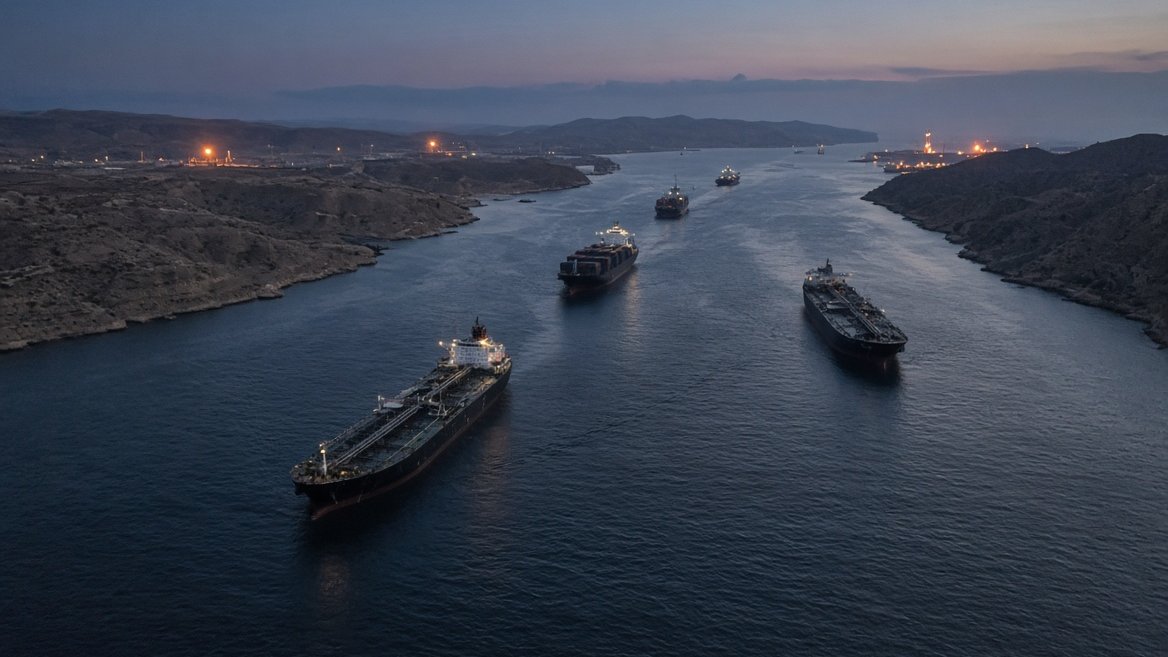
Brent rose 2.2% to $111.19 a barrel after touching its highest level in five months. According to AP, Iranian state television said seven tankers caught fire or were damaged in the Strait of Hormuz, and Tehran said they were hit by Iran or struck naval mines. If verified, it would be the largest number of vessels damaged in a single day since the Iran war began on 28 February. These are Iranian claims and have not been independently verified.
Brent has swung between $97 and $112 through October on uncertainty over when the war will end. The 10-year US Treasury yield fell to 5.05% from 5.13% the same day as investors looked for safer assets. Yesterday’s tanker-rate story is in the 10/22 briefing.
Source: Transport Topics (AP)
How high has Gulf-to-Asia crude freight gone?
The IEA says the cost of shipping crude from the Middle East Gulf to Asia passed $37 a barrel by mid-October, more than five times prewar levels. For a very large crude carrier (VLCC) with 2 million barrels, that is over $74 million per cargo, compared with less than $15 million before the conflict.
The cause is the workaround network. Kpler data show the share of Gulf crude exports bypassing Hormuz rose from about 17% before the war to 40% in September. Flows through the strait, including offshore transfers, are still about 82% of prewar levels. The Wall Street Journal counted about 30 attacks on vessels so far in October.
Source: gCaptain (citing the IEA and Kpler)
Where does Japan’s yttrium supply stand?
An official at Japan’s industry ministry said on 21 October that “exports of yttrium have stalled not only to Japan but worldwide, causing a supply-demand crunch and soaring prices.” The Financial Times had reported that Japan could run out of the metal within months. Yttrium is used in consumer electronics, LEDs, aircraft engines and chipmaking equipment.
Chinese customs data show yttrium oxide exports to Japan of 4,000 kg in September, against 51,000 kg a year earlier. China accounts for 92% of global refined rare-earth output, according to the IEA. Price gaps for yttrium are covered in the 10/22 briefing.
Source: The Japan Times (AFP-Jiji)
When will the US-China “30-for-30” tariff cuts apply?
That hasn’t been set. The US-China Board of Trade approved lists of goods worth about $30 billion on each side (based on 2024 trade), but rates and effective dates depend on each country’s domestic legal process. The trade truce itself was extended by two months, from 10 November 2026 to 10 January 2027, around President Xi’s September visit to the US.
The US list has 77 eight-digit HTSUS subheadings, including toys (excluding wireless-enabled ones), small household appliances, Christmas decorations and child car seats. China’s list has 1,619 tariff lines, including meat, seafood, fruit, grains, wood, coal, cosmetics and medical devices. China’s commerce ministry says more than 90% of the goods will be exempt from additional tariffs and get most-favoured-nation (MFN) rates, but USTR documents do not mention MFN treatment.
Sources: China’s Ministry of Commerce, Bae, Kim & Lee (BKL) newsletter, Chung-Hua Institution for Economic Research
What is the WTO’s latest trade outlook?
On 8 October the WTO raised its forecast for 2026 world merchandise trade volume growth to 3.9%, from 1.9% in March. Strong imports of AI-related goods such as chips and data-centre equipment outweighed the energy and fertilizer disruptions from the Middle East conflict. It expects 4.1% growth in 2027.
It cut its services trade forecast to 3.3% from 4.8% because of weaker transport and travel. For 2026 it expects Asia’s merchandise exports to grow 9.9% and the Middle East’s to fall 17.2%.
Source: WTO press release, 8 October
What it means for traders
- Freight and surcharges: higher crude freight can feed into fuel surcharges. When you get a quote, check the surcharge reference date and change terms.
- Insurance: for cargo routed via the Middle East or offshore transfers, confirm war-risk cover before shipment (see ICC A, B and C cargo clauses).
- Tariffs: if you trade toys, small appliances or farm goods between the US and China, check by HS code whether your product is on a “30-for-30” list and watch for effective dates (see HS code lookup and classification). If you export to the US using Chinese inputs, review your origin determination too (see certificate of origin issuance).
- Materials: if you source yttrium-containing parts from Japan, ask suppliers about their supply plans and stock now.
- Contracts: while freight moves fast, review who pays freight under your Incoterms and any adjustment clauses (see Incoterms 2020 summary).
What to check now: carrier freight and surcharge notices, war-risk cover on Middle East routings, whether your products are on the “30-for-30” lists, and stock of rare-earth parts.
FAQ
Has the damage to seven tankers been confirmed?
As of 22 October it was a report by Iranian state television. AP noted that, if verified, it would be the most vessels damaged in one day since the war began. Check carrier and insurer notices before changing shipping plans.
Do goods on the “30-for-30” lists get lower tariffs right away?
No. Approving the lists does not change tariffs by itself; the US and China each set rates and dates after their own domestic procedures. Confirm exact rates in each customs authority’s official notices.
Will higher crude freight make container shipping more expensive?
Not at the same rate, but it can feed through via fuel costs and bunker surcharges. Check the surcharge lines and validity period on your quotes.
Press coverage and sources
- https://www.ttnews.com/articles/oil-prices-tankers-damaged (Transport Topics/AP, tanker damage and oil prices)
- https://gcaptain.com/iea-gulf-oil-shipping-costs-top-37-per-barrel-five-times-pre-war-levels/ (gCaptain, IEA freight and Kpler export data)
- https://www.japantimes.co.jp/business/2026/10/22/rare-earth-supply-stall/ (The Japan Times, Japan yttrium supply)
- https://english.mofcom.gov.cn/News/SignificantNews/art/2026/art_4563e1bf2d9a45d38a4663496815d2e0.html (China’s Ministry of Commerce, “30-for-30” framework)
- https://www.bkl.co.kr/en/law/insight/newsletter/6811 (BKL, truce extension and product lists)
- https://www.cier.edu.tw/en/institution-en/33133/ (CIER, MFN treatment gap)
- https://www.wto.org/english/news_e/news26_e/stat_08oct26_510_e.htm (WTO, October trade outlook)
Related posts
Hormuz Tanker Rates: What Changes? | World Briefing 10/22
Goldman Sachs puts average crude freight above $20 a barrel. Gulf exports beat prewar levels via bypass routes, while container rates and yttrium tighten.
Hormuz Tanker Attacks: What Changes? | World Briefing 10/21
Tanker attacks in Hormuz continue, yet Brent settled at $108.79 on US-Iran talk hopes. What higher tanker and container rates mean for shippers.
Hormuz Flows at 68%: What Changes? | World Briefing 10/17
Hormuz oil flows sit at 68% of normal, supertanker rates ease from records and the US-China truce is extended. What changes for your costs?
Hormuz Tanker Shortage: What Changes? | World Briefing 10/7
Gulf crude flows recovered, yet tankers stayed scarce and Brent held above $100. Why charter rates matter more than oil prices for shippers this week.
Collaboration & consulting: contact@silenseatrading.com
More in Markets & Economy: Global Sales & Market Research